
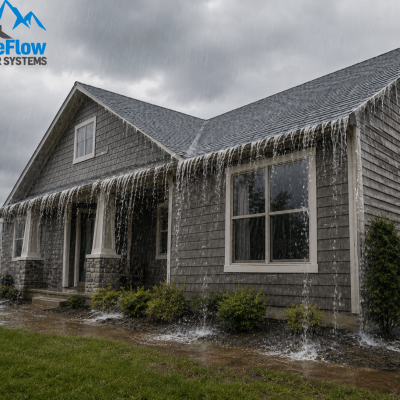
Are gutters really necessary? Let’s cut to the chase.
At SureFlow Gutters LLC, we get this question a lot from homeowners in Simpsonville and surrounding areas.
Short Answer: Yes, gutters are necessary for most homes. They’re not just decorative trim pieces—they’re your home’s defense system against water damage.
The Reality: A single heavy rainstorm in Simpsonville can dump thousands of gallons of water off your roof. Without gutters, all that water crashes down around your foundation like a waterfall. And waterfalls belong in nature, not next to your house.
Bottom Line: Skipping gutters might seem like a way to save money upfront, but it’ll create expensive problems later.
Here’s everything you need to know about why gutters matter (and when you might not need them).
What Gutters Actually Do for Your Home
Think of gutters as your home’s circulatory system. They collect water from your roof and channel it away from places where it can cause damage.
Without gutters, rainwater becomes a destructive force that:
- Erodes soil around your foundation
- Causes basement flooding
- Creates muddy, unusable outdoor spaces
- Damages your home’s siding and exterior
- Turns your landscaping into a swamp
The Physics Are Simple
Your roof collects water. A lot of water. A 1,000-square-foot roof sheds about 600 gallons of water during a one-inch rainstorm. That’s four bathtubs worth of water looking for somewhere to go.
Gutters give it a controlled path. Without them, gravity takes over and water goes everywhere you don’t want it.
When Gutters Aren’t Necessary (Rare, But It Happens)
Before you think we’re just trying to sell you gutters, let’s be honest about when you might not need them:
Your Home Has These Specific Conditions:
- Large roof overhangs (2+ feet beyond the walls)
- Steep lot that naturally drains water away
- No basement or crawl space
- Excellent natural drainage all around the house
- You live in an extremely dry climate (not South Carolina)
Even Then, You Might Want Them
Even if your home technically doesn’t “need” gutters, they still provide benefits:
- Protect your landscaping from erosion
- Keep mud from splashing on your siding
- Prevent ice dams in winter
- Collect rainwater for gardening
Here in Simpsonville, we get about 47 inches of rain per year. That’s enough to cause problems without proper water management.
What Happens to Homes Without Gutters
We’ve seen it all at SureFlow Gutters. Here’s what actually happens when homes don’t have gutters:
Foundation Problems (The Big One)
Water pools around your foundation, creating pressure that can:
- Cause cracks in basement walls
- Lead to flooding
- Create settling issues
- Result in expensive foundation repairs
Siding and Exterior Damage
Water running down your walls causes:
- Staining and discoloration
- Wood rot in trim and siding
- Paint peeling and bubbling
- Mold growth
Landscape Destruction
Constant water runoff creates:
- Erosion channels in your yard
- Dead plants from overwatering
- Muddy areas that never dry
- Washed-away mulch and soil
Why South Carolina Homes Especially Need Gutters
Our climate isn’t gutter-optional. Here’s why:
We Get Serious Rainfall
- Summer thunderstorms dump inches in minutes
- Hurricane season brings heavy, sustained rain
- Spring storms can be intense and frequent
Our Soil Conditions
- Clay soil doesn’t absorb water quickly
- Water sits on the surface longer
- Creates more runoff problems
High Humidity
- Moisture problems get worse fast
- Mold and mildew love wet conditions
- Wood rot happens quicker in humid climates
Types of Homes That Absolutely Need Gutters
Some homes are more vulnerable than others. You definitely need gutters if your home has:
Any of These Features:
- Basement or crawl space
- Minimal roof overhang
- Landscaping close to the house
- Stucco or wood siding
- Steep or complex roof lines
- Previous water damage issues
These Lot Conditions:
- Flat or slightly sloped yard
- Poor natural drainage
- Clay or compacted soil
- Neighbors’ water runs toward your property
The Real Impact of Going Without Gutters
Let’s talk about what actually happens when homes don’t have gutters.
Damage That Accumulates Over Time:
- Foundation issues from constant water exposure
- Landscaping that needs frequent replacement
- Exterior surfaces requiring ongoing maintenance
- Paint that needs frequent touch-ups
Major Problems When Things Go Wrong:
- Foundation cracks requiring professional repair
- Basement flooding and water damage
- Siding replacement from water damage
The Gutter Advantage:
- Prevents water-related damage
- Protects your investment
- Requires minimal maintenance
- Lasts 15-20 years with proper care
The bottom line: Gutters protect your home from preventable damage.
What Good Gutters Actually Look Like
Not all gutters are created equal. Here’s what makes the difference:
Proper Sizing
- 5-inch gutters for most homes
- 6-inch gutters for large or steep roofs
- Adequate downspouts (one per 35-40 feet of gutter)
Quality Materials
- Aluminum: Lightweight, rust-resistant, affordable
- Copper: Long-lasting, beautiful, expensive
- Steel: Strong, prone to rust without coating
Professional Installation
- Proper slope for drainage
- Secure mounting to fascia
- Sealed joints and corners
- Adequate downspout placement
Signs Your Home Is Suffering Without Gutters
Walk around your house and look for these warning signs:
Around Your Foundation:
- Erosion or channels in the soil
- Water stains on foundation walls
- Cracks in concrete or masonry
- Standing water after rain
On Your Exterior:
- Stains running down from the roof line
- Peeling paint near the ground
- Mold or mildew on siding
- Damaged or missing landscaping
In Your Basement:
- Musty odors
- Water stains or moisture
- Cracks in walls or floor
- Efflorescence (white, chalky deposits)
If you see any of these signs, you need gutters. Yesterday.
Making the Decision: A Simple Framework
Still not sure? Ask yourself these questions:
- Has water ever pooled around your foundation? If yes, you need gutters.
- Do you have landscaping you want to protect? Gutters will save your plants and mulch.
- Is your basement dry? Keep it that way with gutters.
- Do you plan to stay in your home long-term? Gutters are an investment in your property value.
- Would you rather prevent problems or fix them? Prevention is always cheaper.
Why Professional Installation Matters
Here’s the thing about gutters: They’re simple in concept but tricky to install correctly.
What Can Go Wrong:
- Improper slope causes standing water
- Loose mounting leads to sagging gutters
- Poor joint sealing creates leaks
- Wrong sizing causes overflow
What We Do Right at SureFlow Gutters:
- Calculate proper sizing for your roof
- Ensure correct slope for drainage
- Use quality materials and fasteners
- Seal all joints properly
- Place downspouts strategically
We’ve been installing gutters throughout Simpsonville and the surrounding areas long enough to know what works and what doesn’t.
Frequently Asked Questions
How much do gutters cost to install? Gutter installation is an investment in your home’s protection. The price depends on your home’s size, roof complexity, and material choice. Contact us for a free estimate based on your specific needs – we’ll help you understand the value gutters provide for your particular situation.
Can I install gutters myself? While possible, we don’t recommend it. Improper installation often costs more to fix than hiring professionals from the start. Plus, you’re working at height with tools—safety matters.
How often do gutters need maintenance? Clean your gutters twice a year minimum—spring and fall. Inspect them after major storms. Well-maintained gutters last 15-20 years or more.
What happens if I wait to install gutters? Every rainstorm without gutters causes a little more damage. The longer you wait, the more expensive the eventual repairs become. Plus, some damage isn’t reversible.
Do gutters work in heavy rain? Properly sized and installed gutters handle heavy rain just fine. If yours overflow during storms, they’re either too small, clogged, or improperly installed.
Should I get gutter guards? Gutter guards reduce maintenance but don’t eliminate it. They’re worth considering if you have lots of trees or hate cleaning gutters. But they’re not necessary for gutter function.
Can gutters prevent all water damage? Gutters prevent most water damage related to roof runoff. They won’t solve problems from plumbing leaks, rising groundwater, or other water sources.
Do gutters affect my home’s value? Yes, positively. Buyers expect functional gutters on homes. Missing or damaged gutters are red flags that suggest potential water damage issues.
What’s the difference between sectional and seamless gutters? Seamless gutters have fewer joints, meaning fewer leak points. They’re formed on-site to fit your home exactly. Sectional gutters are pieced together and more prone to leaks over time.
How long do gutters last? Quality gutters last 15-20 years with proper maintenance. Cheap gutters might only last 5-10 years. Consider it a long-term investment in your home’s protection.
Do I need gutters if I have good drainage? Even with good yard drainage, you still need to manage the water coming off your roof. Gutters control where that water goes instead of letting it create its own path.
Wondering if your Simpsonville home needs gutters? Contact SureFlow Gutters LLC for a free assessment. We’ll evaluate your home’s specific needs and help you make the right decision for your property and budget.