Gutter guards help keep leaves, twigs, and other debris out of your gutters, but they cannot prevent ice from forming when temperatures drop.
During winter, ice can build up on top of the guards, inside the gutters, or along the roof edge. In some cases, this can restrict water flow, cause gutters to overflow, or add extra weight to the gutter system.
However, ice buildup does not necessarily mean your gutter guards are faulty or need to be replaced. The severity of the problem often depends on the weather conditions, the type of gutter guard, and how well the gutter system drains.
In this article, we’ll explain why gutter guards freeze, the problems ice buildup can cause, and how to protect your gutters during winter.
Can Gutter Guards Freeze?
Yes, gutter guards can freeze during winter. When snow melts on your roof, water can flow onto the guards and into the gutters. If temperatures drop below 32°F (0°C), that water can freeze and form ice on top of or inside the gutter system.
However, snow isn’t necessary for gutter guards to freeze. Freezing rain can coat the guards in ice, while rainwater left in the gutters can freeze overnight as temperatures drop. Repeated freezing and thawing can also cause ice to accumulate over time.
In our experience, drainage problems can worsen ice buildup. Wet leaves, pine needles, and other debris can trap moisture on top of the guards, while clogged downspouts or improperly sloped gutters can leave standing water that freezes beneath them.
Not all ice buildup signals a problem. A thin layer of frost or ice may melt as temperatures rise without affecting drainage, but heavier ice that covers the guard openings or fills the gutters can interfere with water flow and may require attention.
What Happens When Gutter Guards Freeze?
When ice builds up on gutter guards, it can restrict water flow and prevent rainwater or melting snow from entering the gutters. Depending on how much ice accumulates and where it forms, you may notice several problems.
- Water overflowing the gutters: Ice covering the guard openings can prevent water from entering the gutters, causing it to spill over the edges instead.
- Icicles forming along the gutters: Water flowing over frozen guards can refreeze along the gutter edges, creating icicles that may grow larger during repeated freeze-thaw cycles.
- Gutters sagging or pulling away: Heavy ice buildup can add significant weight to the gutter system, putting additional stress on hangers, fasteners, and fascia boards.
- Water getting behind the gutters: Ice buildup and drainage problems can allow water to reach the fascia, especially where gutters have loose connections or gaps. Over time, repeated moisture exposure can lead to wood rot and other damage.
In most cases, minor ice buildup will melt as temperatures rise. However, recurring overflow, heavy icicles, or gutters pulling away from the house may indicate drainage problems that need professional attention.
Do Gutter Guards Cause Ice Dams?
Gutter guards typically don’t cause ice dams, although ice can accumulate around the guards and roof edge when an ice dam forms.
An ice dam is a thick ridge of ice that develops near the edge of a roof. It forms when snow melts on warmer sections of the roof and flows toward the colder eaves, where it refreezes. As more ice accumulates, it can prevent additional meltwater from draining off the roof.
Water trapped behind an ice dam may eventually work its way beneath the shingles and cause leaks inside the home.
Heat escaping from the living space into the attic often contributes to ice dams, especially when attic insulation or air sealing is inadequate.
While gutter guards usually don’t create these conditions, ice can build up on the guards and restrict drainage at the same time.
Some common signs of ice dams include:
- Thick ridges of ice along the roof edge: Ice accumulating near the eaves can prevent melting snow from draining.
- Large icicles along the roofline: These may accompany ice dams, although icicles alone do not necessarily indicate a problem.
- Water stains on ceilings or walls: Water backing up behind an ice dam can enter beneath the roofing materials and cause interior leaks.
If you notice these signs, we recommend having the roof and gutter system inspected to identify the source of the problem rather than assuming the gutter guards are responsible.
Do Some Types of Gutter Guards Freeze More Easily?
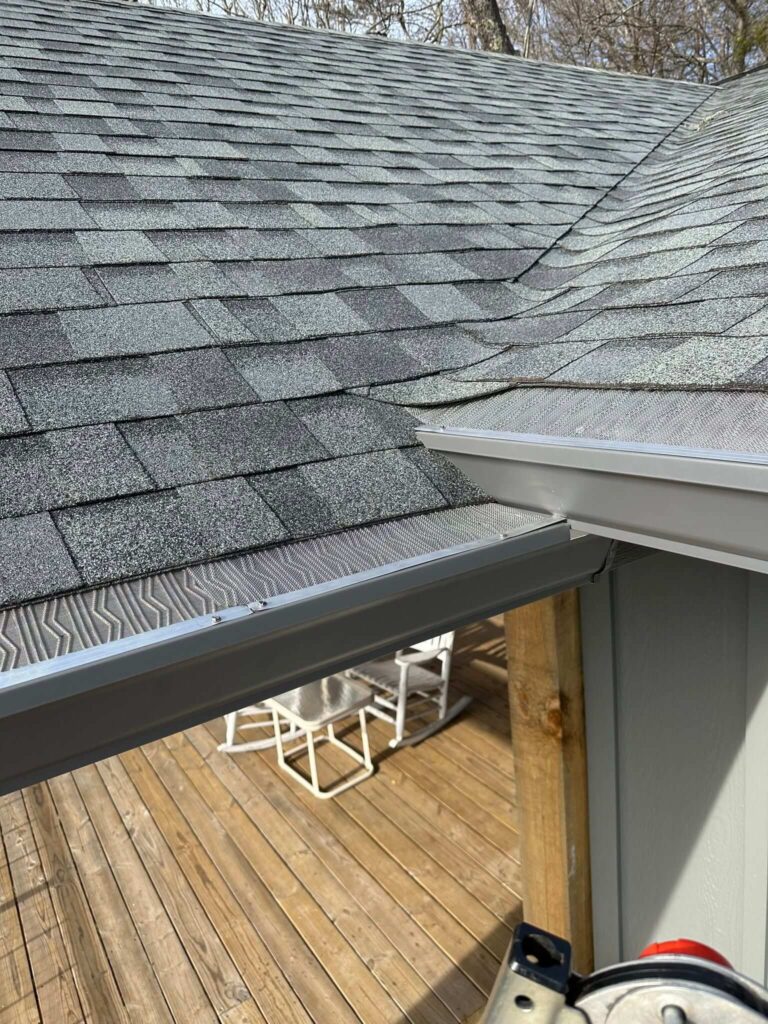
Different types of gutter guards handle freezing conditions differently. The material, opening size, and guard design can affect how ice forms and whether water can keep flowing into the gutters.
Here’s how common gutter guard designs perform during freezing weather:
| Type of Gutter Guard | What Happens in Freezing Weather |
|---|---|
| Micro-mesh gutter guards | Fine stainless steel mesh helps keep small debris out, but ice can cover the tiny openings and temporarily restrict water flow. |
| Perforated aluminum guards | Water passes through holes in the metal cover, although ice can form over the openings or accumulate beneath the guard. |
| Reverse-curve gutter guards | Water follows a curved surface into the gutter, but ice can form along the curved edge and cause water to spill over. |
| Foam gutter guards | Foam inserts can retain moisture and debris, which may freeze and obstruct drainage. |
| Brush gutter guards | Leaves and other debris can collect around the bristles, trapping moisture that freezes during cold weather. |
For homes surrounded by trees, we often recommend gutter guards that can keep leaves, pine needles, and smaller debris from entering the gutters. Stainless steel micro-mesh systems can be a good option, although they are not completely resistant to ice buildup.
Regardless of the type, proper installation, gutter slope, and clear downspouts all affect how well the system drains during winter. Even high-quality gutter guards can develop ice buildup when temperatures remain below freezing.
What to Do When Gutter Guards Are Covered in Ice
If your gutter guards are covered in ice, you don’t necessarily need to remove it. A thin layer of ice may melt naturally as temperatures rise, especially if there are no signs of drainage problems or damage.
However, if the ice is thick or water is overflowing the gutters, do a few things.
- Check for visible damage: From the ground, look for sagging gutters, loose gutter guards, large icicles, or water spilling over the edges during a thaw.
- Avoid breaking the ice yourself: Do not use hammers, shovels, or other sharp tools to chip away at the ice. These can damage the gutter guards, loosen fasteners, or bend gutter sections.
- Stay off icy roofs and ladders: Ice makes working around the roofline dangerous. Avoid climbing up to remove frozen debris or ice.
- Watch for water leaks: Check for water stains on ceilings, walls, or fascia boards that could indicate water is getting behind the gutters or entering the home.
If ice buildup continues to cause drainage problems or your gutters appear damaged, we recommend a professional inspection.
When we inspect gutters after freezing weather, we check the condition of the guards, gutters, fasteners, and downspouts to identify any underlying problems.
Depending on what we find, we may recommend cleaning, repairs, or adjustments to restore proper drainage.
How to Prevent Gutter Guards From Freezing
You cannot completely prevent ice from forming on gutter guards during freezing weather. However, proper maintenance and drainage can help reduce heavy ice buildup and the risk of damage to your gutter system.
Here are a few steps we recommend taking before winter:
- Clean your gutters and gutter guards: Remove leaves, pine needles, twigs, and other debris that can trap moisture or block water from entering the gutters.
- Keep downspouts clear: Check for clogs and make sure water can flow freely through the downspouts. Blocked downspouts can leave standing water inside the gutters that may freeze when temperatures drop.
- Check the gutter slope: Gutters should direct water toward the downspouts without collecting in low spots. Improperly sloped gutters can hold water that freezes overnight.
- Inspect the gutter guards: Look for loose, bent, or damaged sections that may interfere with drainage. Make sure the guards fit securely and allow water to enter the gutters properly.
- Address attic insulation and ventilation problems: If your home frequently develops ice dams during snowy weather, heat escaping into the attic may be contributing to the problem. Proper insulation, air sealing, and ventilation can help reduce uneven roof temperatures.
- Consider heating cables for recurring ice problems: In some situations, professionally installed roof and gutter heating cables can help maintain a drainage path during freezing conditions. However, they do not address underlying drainage problems or the causes of ice dams.
In our experience, the best approach is to make sure your gutters and downspouts drain properly before freezing weather arrives.
If your gutter guards repeatedly develop heavy ice buildup, we recommend having the system inspected to identify any drainage or installation problems that may be contributing to it.
Should Gutter Guards Be Removed in Winter?
In most cases, no.
Gutter guards are designed to stay in place year-round, including during winter. Removing them before freezing weather can leave your gutters exposed to leaves, pine needles, and other debris that may cause clogs and drainage problems.
Removing gutter guards also won’t necessarily prevent ice buildup. Water can still freeze inside uncovered gutters, especially when downspouts are blocked or gutters don’t drain properly.
However, if your gutter guards repeatedly collect heavy ice, become damaged, or prevent water from entering the gutters, it may be worth having them inspected.
Depending on the condition and type of guards, we may recommend cleaning, adjusting, repairing, or replacing sections of the system.
In most cases, addressing the underlying drainage problem is a better long-term solution than removing gutter guards every winter.
Keep Your Gutters Ready for Winter
Gutter guards can freeze during winter, but ice buildup doesn’t always mean the guards are faulty or need to be replaced. In many cases, drainage problems, clogged downspouts, or debris buildup can make freezing conditions worse.
In Seneca and across Upstate South Carolina, freezing rain and fluctuating winter temperatures can cause ice to form on gutters and guards, even without significant snowfall.
At SureFlow Gutters, we help homeowners identify and address gutter problems, including damaged guards, clogged gutters, and drainage issues that can contribute to ice buildup.
If you’ve noticed recurring ice buildup, overflowing gutters, or damage after freezing weather, contact SureFlow Gutters LLC for a free estimate.
Our team can inspect your gutter system and recommend the appropriate cleaning, repairs, or gutter guard solutions to keep water flowing properly.