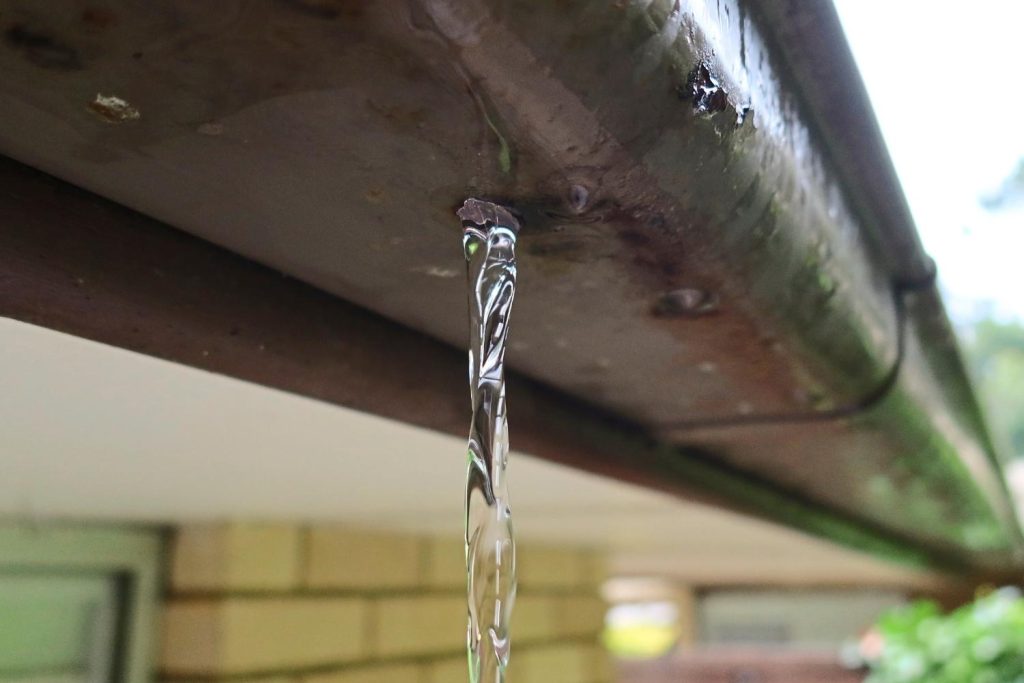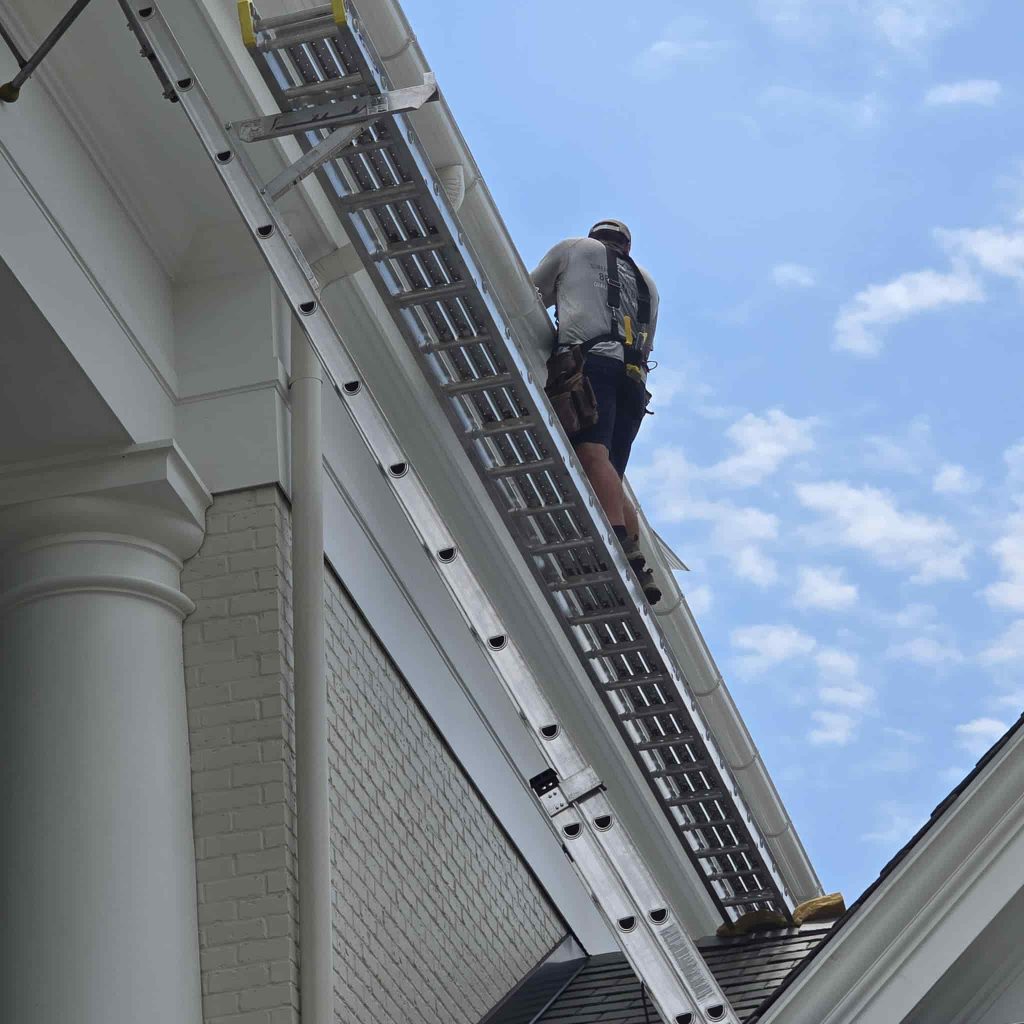
A gutter pulling away from your house usually means something in the system is no longer providing the support it should. In our experience, the problem can be a loose hanger or fastener, or bigger issues like rotted fascia, standing water, heavy debris, poor drainage, or a poor installation.
A loose gutter may sag further or eventually pull away from the house altogether. It can also let rainwater run behind the gutter or spill over the edge, damaging the fascia, soffit, siding, and areas around the foundation.
In this guide, we’ll walk through the common reasons gutters pull away from a house, what the warning signs mean, and when the problem can be repaired versus when replacement may make more sense.
Why Is My Gutter Pulling Away From the House?
Gutters can pull away from a house for several reasons, but the problem usually comes down to the gutter losing support or carrying more weight than its attachment points can handle.
Here are some of the most common causes we see:
1. Loose or Failed Gutter Hangers
Gutter hangers secure the gutter to the fascia and support the system’s weight. When a hanger loosens, bends, or breaks, the gutter can start to sag and pull away from the house.
Hangers can loosen over time, especially when the gutter regularly carries extra weight from standing water or debris. Hangers spaced too far apart can also leave parts of the gutter without enough support.
You may notice a gap forming between the gutter and fascia or one section of the gutter sitting lower than the rest.
If the fascia is still in good condition, replacing or securing the failed hangers may be enough to fix the problem. If the fascia is soft or damaged, however, the repair needs to address that first.
2. Old or Pulled-Out Fasteners
The screws or other fasteners that hold your gutter system in place can loosen and pull out over time. Once they lose their grip, the gutter may start separating from the fascia.
This can happen as the gutter shifts under the weight of water and debris, or repeated stress works the fasteners loose. Older gutter systems may also use spikes that gradually pull out of the fascia over time.
When we find loose or pulled-out fasteners, we usually replace them and secure the gutter back into solid wood. If the new fasteners do not have a solid surface to grip, however, the fascia may be damaged and need attention before we can properly secure the gutter.
3. Rotten or Damaged Fascia
The fascia is the board along the edge of your roof where the gutter is typically attached. If the fascia starts to rot or deteriorate, the hangers and fasteners may no longer have solid wood to grip, allowing the gutter to pull away from the house.
One of the most common causes of fascia damage we find is moisture. Water can get behind the gutter because of leaks, overflowing gutters, or drainage problems and keep the wood wet over time. You may notice peeling paint, staining, soft wood, or areas where the fascia has started to deteriorate.
When we find damaged fascia behind a loose gutter, we address the damaged area first so the gutter can be secured to a solid surface.
4. Heavy Debris and Standing Water
Leaves, pine needles, twigs, and other debris can build up inside a gutter and prevent rainwater from flowing freely toward the downspouts. As debris and standing water accumulate, the extra weight puts more stress on the hangers and fasteners holding the gutter in place.
We see this problem often when clogged gutters remain full after heavy rain. The added weight can cause sections of the gutter to sag, loosen the attachment points, and eventually pull the gutter away from the fascia.
If debris or standing water is contributing to the problem, we clear the blockage and check the gutter for damaged hangers, loose fasteners, and proper drainage.
We also check whether the added weight has affected the fascia or other parts of the gutter system before securing it back in place.
5. Storm or Physical Damage
Strong winds, falling branches, and other storm-related impacts can loosen or damage a gutter and pull it away from the house. A ladder leaned against the gutter or another direct impact can cause similar damage.
We often see storm-related problems in one section of the gutter rather than across the entire system. You may notice a bent gutter, loose or broken hangers, pulled-out fasteners, separated joints, or a section that suddenly sits lower than it did before.
When we inspect storm damage, we check more than the section that has pulled away. We also look at the hangers, fasteners, fascia, and gutter itself to determine whether the damaged section can be secured again or needs to be replaced.
6. Poor Gutter Pitch or Drainage
Gutters need a slight slope toward the downspouts so rainwater can move through the system and drain away. If the pitch is incorrect, water can collect in low spots and add unnecessary weight to the gutter.
Drainage problems can also happen when a downspout is clogged or cannot move water out of the gutter fast enough. During heavy rain, the gutter may stay full for longer, putting additional strain on the hangers and fasteners.
When we see standing water in a gutter that is pulling away, we check the pitch and downspouts along with the attachment points. Correcting the drainage issue helps prevent the same section from becoming overloaded and pulling loose again.
7. Improper Installation or Inadequate Support
A gutter can start pulling away even when the system is relatively new. In these cases, the issue may go back to how the gutter was installed.
Hangers spaced too far apart may not provide enough support, especially when the gutter fills with rainwater. Fasteners also need to anchor securely into solid material, and the gutter needs the right pitch to move water toward the downspouts.
These installation issues may not be obvious right away. The gutter can look fine at first and begin to sag or separate after repeated rain and normal use.
If a newer gutter is already pulling away, we look at the installation as a whole rather than simply tightening the loose section. Correcting the support, attachment, or pitch can help keep the problem from coming back.
How to Tell Why Your Gutter Is Pulling Away
How your gutter is pulling away can give you clues about what is causing the problem.
Look for signs such as:
- One section sagging lower than the rest: A loose or failed hanger may no longer be supporting that part of the gutter.
- Screws or spikes sticking out: The fasteners may have worked loose, or the fascia may no longer be solid enough to hold them.
- A growing gap between the gutter and fascia: Check for failed hangers, loose fasteners, or damage to the fascia behind the gutter.
- Soft, stained, or peeling fascia: These signs can point to moisture damage or rot behind the gutter.
- Water sitting in the gutter after the rain stops: The gutter may have an incorrect pitch, a low spot, or a drainage problem.
- Leaves, pine needles, or other debris filling the gutter: A clog can trap water and add enough weight to strain the gutter and its attachment points.
- Several sections pulling away: Widespread sagging can point to inadequate support, an installation issue, or an older gutter system that is starting to fail.
- Damage that appears after a storm: Strong winds, falling limbs, or another impact may have damaged the gutter or its hardware.
These signs can help narrow down the cause, but the problem is not always visible from the ground. For example, the fascia behind the gutter may look fine from the outside even though the wood around the attachment points has started to deteriorate.
When we inspect a gutter that is pulling away, we check the gutter, hangers, fasteners, fascia, pitch, and drainage to determine what caused it to come loose.
From there, we can determine whether the gutter simply needs to be secured again, whether damaged components need repair first, or whether part of the system needs to be replaced.
How to Fix a Gutter That Is Pulling Away From the House?
In some cases, we can replace failed hangers or fasteners and secure the existing gutter back in place. Other problems require additional work before the gutter can be reattached.
For example, damaged fascia needs to provide a solid attachment point before new hardware can hold properly. If standing water or poor drainage contributed to the problem, we may also need to correct the gutter pitch, clear a blockage, or address the downspout.
A typical gutter repair may involve:
- Removing debris or other obstructions that are adding weight to the gutter
- Replacing loose, broken, or missing hangers
- Replacing fasteners that have pulled out or no longer hold securely
- Addressing damaged fascia before reattaching the gutter
- Repositioning the gutter to restore the proper pitch
- Checking downspouts and other drainage points for blockages
- Replacing a bent or damaged section when it cannot be properly secured
Once the gutter is secure, we check how water moves through the system to make sure it drains toward the downspouts without collecting in low spots. We want to correct the reason it pulled away so the repair holds up when the next heavy rain comes through.
Should You Repair or Replace a Gutter That’s Pulling Away?
If the gutter itself is still in good condition and the problem is limited to a few hangers, fasteners, or a small section, a repair may be enough.
We typically look at the condition of the entire affected section before recommending repair or replacement.
A repair may make sense when:
- Only a few hangers or fasteners have failed
- The gutter is still straight and in good condition
- The fascia can provide a solid attachment point
- The problem is limited to one area
- The gutter can still be pitched correctly and drain as it should
Replacement may make more sense when:
- The gutter is bent, cracked, or badly damaged
- Multiple sections are sagging or pulling away
- The gutter has significant rust or corrosion
- The system has recurring problems even after previous repairs
- The existing gutter or downspout setup does not handle water properly
- Repairing the damaged sections would not provide a reliable long-term fix
If the existing gutter is still in good shape, we may be able to address the damaged fascia and reinstall or secure the gutter once there is a solid attachment point.
The decision comes down to whether the existing gutter can still do its job reliably after the underlying problem is corrected.
Is Your Gutter Pulling Away From the House? Let SureFlow Take a Look
A gutter that is pulling away does not always mean you need a new gutter system.
At SureFlow Gutters, we inspect the gutter and its attachment points to find out why it is pulling away and what it will take to fix it properly. We’ll explain what we find and recommend the repair that makes sense for your home.
If you have a loose or sagging gutter in Seneca or the surrounding Upstate South Carolina area, contact SureFlow Gutters to schedule an inspection and get an estimate, or call us at (864) 539-6903.