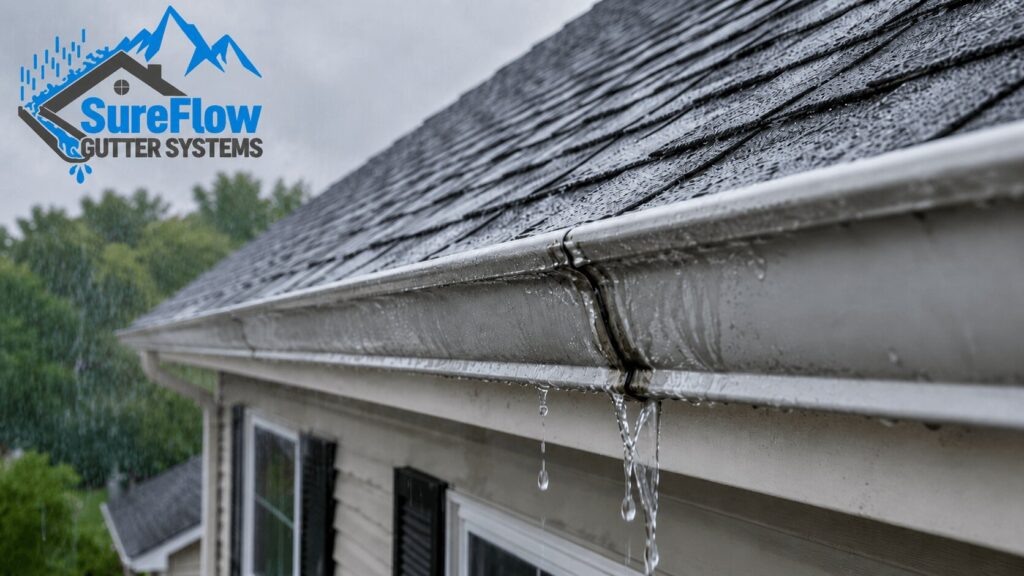
If rainwater is spilling over the sides of your gutters, it usually means something is preventing the water from flowing as it should. The issue often starts with something small, such as a clog, a loose section, a blocked downspout, or a gutter that is no longer pitched correctly.
Gutter overflow is one of the most common problems homeowners notice during heavy rain. When water keeps pouring over the edge, it often lands near the foundation, splashes against the siding, washes out landscaping, or runs behind the gutters, damaging the fascia. If left unaddressed, this can lead to wood rot, soil erosion, moisture in the crawl space or basement, and expensive repairs.
In this article, we’ll walk you through the most common causes of gutter overflow, how we fix them, and how to keep the problem from happening again.
Common Causes of Gutters Overflow
We’ve found that most gutter overflow problems stem from a few common causes. During an inspection, we look for these issues first to identify the source of the problem.
1. Clogged Gutters and Downspouts
A clog is the most common reason gutters overflow, and it is usually the first thing we check. Leaves, roof grit, dirt, pine needles, and other debris can collect inside the gutter trough over time. Water may still flow through the system when the gutter is clogged, but once the buildup thickens enough, rainwater has nowhere to go during a heavy storm, so it spills over the front edge instead of draining through the downspouts.
Often, the gutter can look fairly clean from the ground, while the real blockage is inside the downspout. A homeowner may clear the gutter trough by hand, only to watch it overflow again the next time it rains. In many cases, the water backs up where the gutter meets the downspout or somewhere along the vertical run.
Homes with trees close to the roofline are especially prone to this problem. Pine needles, oak leaves, sweetgum debris, and roof grit can pack together, slowing the entire system down. Pine needles are especially difficult because they can knit together into a mat that water runs over instead of through.
How we fix it:
We clean the gutter trough and downspouts, then confirm that water flows properly through the entire system. If a downspout is clogged, we flush it, clear it, or take it apart as needed to completely remove the blockage. For homes with heavy tree coverage, especially pine trees, more frequent cleaning may be needed to prevent overflow from returning.
2. Improper Pitch or Slope
Gutters need a slight slope toward the downspout so water keeps moving. When the slope is off, water can slow down, sit in the gutter, or collect in the wrong area. Once the next storm comes through, the gutter will already be holding water, making overflow more likely.
A gutter that is too flat may hold water in the middle of the run. A gutter pitched the wrong way may send water away from the downspout. A gutter pitched too steeply can also create problems if water rushes past the outlet instead of draining properly.
This usually happens over time. Fasteners loosen, sections shift, or the original installation was not set correctly. We often notice pitch problems when one section holds water after a storm, or when overflow happens in the same spot every time it rains, even though the gutters are clean.
How we fix it:
We reset the gutter slope so that water flows toward the downspout as it should. On longer runs, this may mean rehanging the section so the fall is consistent from end to end. If hangers are worn, loose, or spaced too far apart, we replace or adjust them so the gutter can hold the proper pitch.
3. Undersized Gutters or Too Few Downspouts
Sometimes the problem is not a clog or a repair issue. The gutter system may simply be too small for the amount of water coming off the roof.
This is common on larger homes, steep roofs, long gutter runs, and rooflines with valleys that send a lot of water into one area. If the gutters or downspouts cannot move water fast enough, the water has nowhere to go but over the front edge.
The telltale sign of an undersized system is overflow that happens mostly during heavy rain. The gutters may drain fine during light or moderate rain, but once a hard downpour hits, the system cannot keep up. The same problem can happen when there are not enough downspouts. If one downspout is expected to drain a too-long gutter run, water may back up before it can exit the system.
A gutter system that works during a steady rain may still struggle when a large amount of water comes off the roof in a short period.
How we fix it:
We look at the roof size, roof pitch, gutter run, downspout placement, and the source of the heaviest water flow. In many cases, the solution is to add downspouts, upgrade to larger ones, or install a larger gutter system to handle more water. For homes with repeated overflow problems, six-inch gutters and larger downspouts may be a better fit than a standard builder-grade setup.
4. Sagging Gutters or Loose Hangers
Gutters are only as effective as the supports holding them in place. When hangers loosen, fasteners back out, or the fascia behind the gutter starts to soften, the gutter can sag or pull away from the roofline.
A sagging gutter creates a low spot where water collects instead of flowing toward the downspout. Once that low area fills up, water spills over the edge. If the gutter has pulled away from the house, water may also run behind it and down the fascia instead of into the trough.
You can often spot this from the ground. The gutter line may look uneven, wavy, or tilted. There may be a visible gap between the back of the gutter and the fascia board. Overflow often concentrates right at the dip or loose section.
Wet debris makes this problem worse. A gutter packed with soaked leaves, pine needles, and standing water becomes heavy, which can pull hangers loose and make the sag worse over time.
How we fix it:
We re-secure the gutter with proper hangers, correct the spacing, and reset the pitch so water drains correctly. If the fascia behind the gutter has rotted, that board needs to be replaced first. New hangers will not hold properly if they are fastened into soft or damaged wood.
5. Water Overshooting the Gutter From Steep Roofs or Valleys
On steep roofs, water can run off so quickly that it shoots past the front lip of the gutter rather than dropping into the trough.
Roof valleys can create a similar problem. A valley collects water from two roof slopes and directs it into a single concentrated area. During heavy rain, the water can hit the gutter with enough force to splash over the edge, even if the gutter is clean and draining properly.
This problem usually causes overflow at a specific point. It often happens below a roof valley, near a corner, or along the steepest part of the roof. The rest of the gutter system may be working normally, but one area turns into a waterfall during heavy rain.
How we fix it:
We inspect where the water is entering the gutter. In many cases, we can install a splash guard or diverter to catch the fast-moving water and direct it into the gutter. In other cases, the better solution may be to adjust the gutter position, add a nearby downspout, or upgrade that section so it can handle the water coming off the roof.
6. Water Running Behind the Gutter
Sometimes the gutter is clean, pitched correctly, and draining properly, yet water still gets behind it.
This can happen when there is no drip edge, the drip edge is installed incorrectly, or the gutter hangs too low beneath the roofline. Instead of dropping into the gutter, water clings to the roof edge and runs down behind the gutter. From the ground, it may not look like traditional overflow because the water is not spilling over the front.
The damage usually shows up behind and below the gutter. You may notice stained fascia, peeling paint, wet soffits, or wood rot along the gutter line. The giveaway is that the wood behind the gutter is getting wet, even though the gutter itself may appear clear.
How we fix it:
We correct the drip edge issue and reset the gutter height as needed to direct water into the trough. If the fascia has already started to rot, that damaged wood must be repaired or replaced before the gutter can be rehung correctly.
7. Gutter Guards That Are Clogged or Not Working Properly
Gutter guards can help reduce debris buildup, but they do not solve every overflow problem. If the guards are clogged, poorly fitted, damaged, or not suited to the debris around the home, water may run over the top rather than enter the gutter.
This can happen when wet leaves, pine needles, seed pods, or roof grit collect on top of the guards. In some cases, the guards block debris, but they also slow the water down too much during heavy rain.
This is especially common in homes with heavy tree coverage or roof valleys that send a large amount of water to one section of the gutter.
How we fix it:
We inspect the guards, clean off built-up debris, and check whether water is entering the gutter properly. Sometimes the guards only need to be cleaned or adjusted. Other times, a different gutter guard style may be a better fit for the home.
8. Heavy Rain That Exceeds the System’s Capacity
Every gutter system has a limit. During an extreme downpour, even clean and properly installed gutters may briefly overflow. The key is knowing the difference between a rare heavy-rain issue and a recurring gutter problem.
If your gutters only overflow during the strongest storm of the year, the system may simply be reaching its limit. But if water spills over during normal rain, that usually points to another issue, such as clogs, poor pitch, sagging sections, undersized gutters, or too few downspouts.
Heavy rain can quickly expose weaknesses in a gutter system. A setup that seems fine in light rain may not keep up during a fast summer downpour.
How we fix it:
We start by ruling out common problems: clogs, downspout blockages, pitch issues, loose sections, and drainage layout issues. If the system is working correctly but still cannot handle heavier rain, we may recommend larger gutters, larger downspouts, or additional downspouts to increase the system’s capacity.
How to Prevent Gutters From Overflowing
Most overflow problems are preventable, and the work to prevent them is far cheaper than repairing the resulting water damage. Here are a few ways we recommend to prevent gutters from overflowing:
- Clean the gutters and downspouts on a local schedule. Twice a year is the baseline, but homes under heavy pine need cleaning closer to four times a year, since needles fall across three seasons and mat together faster than leaves alone. Always confirm the downspouts run clear, not just the trough.
- Check the system after major storms. A single heavy storm can drop enough debris to clog a gutter that was clean the week before, and the aftermath of Hurricane Helene showed how fast a storm can overload a system. A quick look after big weather catches problems before the next rain.
- Make sure the gutters are sized for your roof. If a clean, well-pitched system still overflows in ordinary rain, it is probably undersized. Six-inch gutters with three-by-four-inch downspouts handle our rainfall far better than the five-inch builder default, especially on large or steep roofs.
- Keep the pitch and hangers in good shape. Gutters that sag or pull away create the low spots and gaps where overflow starts. Resecuring hangers and resetting the slope before they fail keeps water moving toward the downspouts.
- Add downspout extensions to move water away from the house. Getting runoff several feet from the foundation matters in the Upstate, where the Cecil red clay soil drains slowly and holds water against the foundation when it pools.
- Choose gutter guards carefully. Quality micro-mesh guards keep debris out while letting our heavy rain through. Cheaper foam, brush, and reverse-curve guards can actually cause overflow in a downpour, so the type matters as much as having them at all.
The most reliable prevention is a professional inspection that checks pitch, sizing, drip edge, and downspout flow all at once, since these problems often travel together, and one missed item can keep a system overflowing even after the obvious fixes.
Get Your Gutters Flowing Again
We install and repair seamless gutters throughout the Upstate and diagnose overflow issues year-round.
When you call us out, we check the whole system at once, the trough, the downspouts, the pitch, the sizing, and the drip edge, so we find the real source instead of treating the symptom. If a cleaning or a repair will solve it, that is what we will tell you. If the system is undersized or worn beyond repair, we will walk you through what a properly sized seamless replacement would look like for your roof.
If your gutters overflow every time it rains, reach out for a free on-site inspection. Call us at (864)539-6903 or contact us to set up a time. We serve the Seneca, Lake Keowee, and Lake Hartwell communities, and homeowners across Oconee and Pickens Counties, as well as Greenville, Anderson, Simpsonville, Easley, and Clemson.