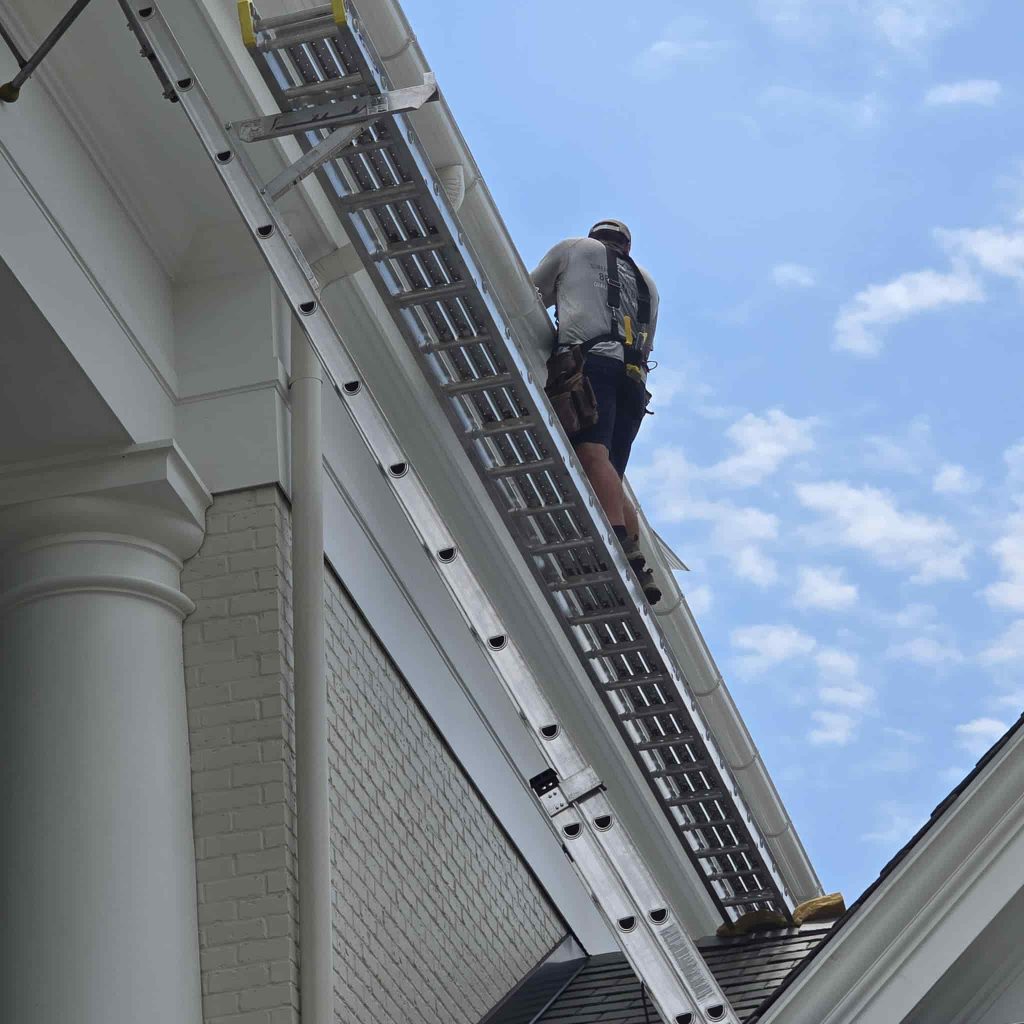
Your gutters play an important role in protecting your home. They collect rainwater from the roof and direct it away from your foundation, siding, landscaping, and other parts of your property. When gutters stop working as they should, water can start causing damage around your home.
In our experience, many major gutter problems start with small issues that homeowners don’t notice right away. Water that spills over damaged gutters can wash away soil and mulch around your landscaping. It can stain siding, damage fascia boards, and contribute to roof edge rot. If enough water collects near the foundation, it may eventually lead to cracks, settling, or moisture problems inside the home.
The longer you ignore a gutter problem, the more expensive it usually becomes. In many cases, a simple repair can prevent the need for larger repairs later.
The good news is that most gutter issues show warning signs before serious damage occurs. In this article, we’ll cover some of the most common signs your gutter needs repair and when it’s time to replace it.
Common Signs Your Gutters Need Repair
The signs your gutter needs repair usually show up during or right after a storm, when water spills over the edge, a section starts to sag, or paint begins peeling off the boards behind the gutter line. If you can spot the problem early, you have a chance to fix it before it causes water damage to your foundation, fascia, or walls.
Here are the most common signs we usually look for:
1. Gutters Are Sagging or Pulling Away From the House
If your gutters appear to be drooping, uneven, or separating from the house, they likely need attention. Look for visible gaps between the gutter and the fascia board, sections that tilt forward, or areas that no longer line up with the rest of the system.
When we inspect sagging gutters, the cause is often loose fasteners, heavy debris buildup, standing water, or fascia boards that have started to rot. In some cases, several of these problems are happening at the same time.
When gutters pull away from the house, water can flow behind them instead of through them. Over time, that moisture can damage fascia boards, soffits, siding, and even parts of the roofline.
2. Water Overflows During Rain
One of the easiest times to spot a gutter problem is during heavy rain. If water is spilling over the front edge of the gutter rather than flowing toward the downspouts, something is interfering with drainage.
The most common cause is a clog, but overflowing water can also be caused by sagging, improperly pitched, damaged, or undersized gutters.
When water overflows, it often lands right next to the foundation or splashes dirt and debris onto the siding. If this keeps happening, it can lead to staining, soil erosion, wood damage, and drainage problems around the home.
3. Rust, Cracks, Holes, or Visible Damage
Small signs of damage can lead to larger gutter problems if left unaddressed. Rust spots, cracks, holes, and weakened areas often develop as gutters age and are exposed to years of rain, sun exposure, debris buildup, and standing water.
These issues commonly appear near seams, corners, end caps, and areas where water tends to sit. Even a small crack or hole can allow a surprising amount of water to escape during a storm. What looks minor from the ground may be sending water onto your siding, trim, landscaping, or foundation every time it rains.
Rust is another warning sign that should not be ignored. Once corrosion begins to spread, the metal can weaken and become more likely to develop larger holes or failing sections. If you notice visible deterioration, it is a good idea to schedule gutter repair before the damage gets worse.
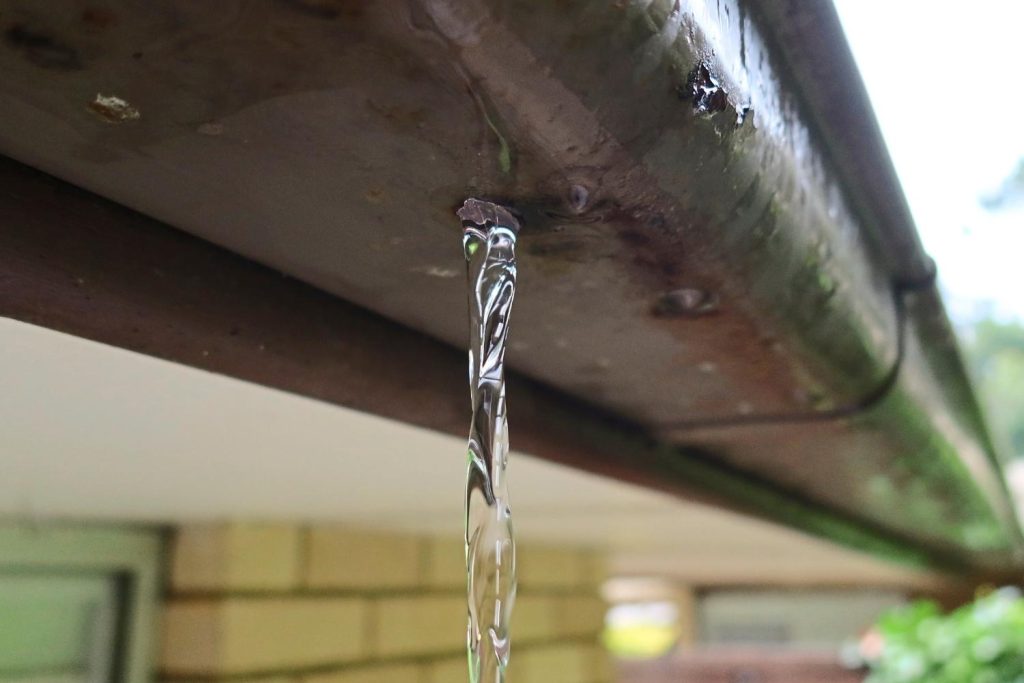
4. Water Is Leaking From the Seams
Water dripping from a gutter seam is one of the clearest signs that repairs may be needed. Seams are the points where two sections of a gutter are joined, and they are often among the first places a gutter system begins to fail.
Over time, changing temperatures can cause these joints to expand and contract. Sealants can also wear down as the gutter system ages. Homeowners may notice dripping water, damp spots, or dark streaks directly below the seams during or after rain.
While a seam leak may seem small at first, it usually gets worse over time. When left unaddressed, leaking seams can contribute to fascia damage, soil erosion, and stains on the home’s exterior. If seam leaks keep recurring, it may also be worth considering seamless gutters, which eliminate most joints in the system.
5. Fasteners, Screws, or Hangers Are on the Ground
If you are finding gutter spikes, screws, or hangers on the ground beneath your gutters, the system may be working itself loose. This is often a sign that the gutters are no longer securely attached to the home.
Fasteners can back out over time as the gutter expands and contracts through changing temperatures. They may also loosen if the fascia behind them has softened or started to rot. You may notice the gutter sagging, tilting, or pulling away in the same areas where the fasteners have failed.
This type of problem can get worse quickly. Once a few fasteners come loose, more weight and pressure fall on the ones that remain. The longer the issue is left alone, the more likely the gutter is to pull farther away from the house or detach completely.
6. Water Is Pooling Around Your Foundation
The clearest sign of a gutter problem is water collecting around the base of your home.
After a rainstorm, walk around your property and look for puddles, soft soil, washed-out mulch, or areas where water seems to collect near the foundation. If the same spots keep holding water, your gutters or downspouts may not be moving water far enough away from the house.
Damaged gutters, leaking joints, sagging sections, clogged downspouts, and poor drainage can all cause water to collect near the home. In the Upstate, this can be especially important because clay-heavy soil can retain water near the foundation rather than allowing it to drain quickly.
For homes with crawl spaces or slabs, that moisture may show up around the exterior walls, underneath the home, or at ground level.
Addressing drainage problems early can help prevent more serious issues with erosion, moisture, and foundation damage.
7. You See Peeling Paint, Stains, or Fascia Damage
Your home’s exterior can reveal gutter problems before you ever see an active leak. Peeling paint, dark streaks, water stains, mildew, or discoloration on the fascia, soffits, or siding may be signs that water is escaping from the gutter system.
Overflowing gutters, leaking seams, and poorly drained sections can all allow water to run over exterior surfaces. Over time, that moisture can break down paint, stain siding, and contribute to wood rot.
Fascia stains rarely appear overnight. When we see peeling paint or staining during an inspection, it usually means water has been escaping from the gutter system for some time. Soft or rotting fascia is more than a cosmetic issue because gutters need solid wood behind them to stay securely attached.
If the fascia has started to fail, it may need to be repaired before the gutter system can be properly secured.
8. Plants or Weeds Are Growing in the Gutters
If plants are growing inside your gutters, there is almost certainly a problem. Seeds can settle into leaves, dirt, and debris that have accumulated in the gutter system. Given enough time, weeds, grass, and other plants can begin to grow.
Vegetation in the gutters is usually a sign that debris has been sitting there for months or even years. By that point, water may no longer have enough room to flow through the system properly. Instead of draining to the downspouts, it can sit in the gutters or spill over the sides.
The added weight of wet debris, soil, and plant growth can also cause gutters to sag, pull away from the house, rust, or develop leaks. If your gutters have visible plant growth, they likely need more than a quick cleaning.
The system should be inspected for clogs, drainage issues, and damage caused by excess weight and standing water.
Should You Repair or Replace Your Gutters?
Many of the signs above can be fixed with a targeted repair, especially when you catch them early. However, in some cases, your gutter might need a complete replacement, and that decision usually comes down to how widespread the damage is, how old the system is, and whether the wood behind the gutters is still solid.
In general, it may be time to consider gutter replacement when you notice:
- Damage in several places at once. When rust, cracks, holes, or leaks show up along the same run, the material itself may be breaking down. Patching one section may only delay the next failure a few feet away.
- Fasteners failing across a whole section. A few loose fasteners can often be re-secured, but once screws, spikes, or hangers are pulling loose along an entire run, the gutter may no longer have a solid hold on the house.
- Sagging or poor drainage in multiple spots. When a system has lost its slope or stopped draining correctly in more than one area, repairs can start chasing the problem from section to section instead of solving it.
- Gutters near the end of their lifespan. Older gutters are more likely to develop repeated problems, especially if they are already showing rust, leaks, sagging, or seam failure. At that point, continued repairs may not be the best long-term investment.
- Rotten fascia behind the gutters. Your gutters need solid wood behind them to stay securely attached. If the fascia has started to rot, it usually needs to be replaced before any gutter work can be done. In that situation, it often makes more sense to install a new gutter system rather than rehang old sections onto fresh boards.
When damage is no longer confined to one or two areas, you may end up paying to repair a system that will continue to fail. In many cases, a new gutter system can cost less over time than repeated repairs.
A full replacement is also a good time to consider seamless gutters. Because they eliminate most of the joints where leaks often start, seamless gutters can reduce one of the most common failure points in a traditional gutter system.
Replacing a full gutter system is a larger investment than a single repair, but the exact cost depends on your home’s size, the material you choose, and the extent of fascia work involved. At Sure Flow Gutters LLC, we provide those numbers after an inspection so you can compare repair and replacement options with the actual figures in front of you.
Don’t Wait Until a Small Gutter Problem Becomes a Big One
Most gutter problems start small. The homeowners who catch the signs early are usually the ones who end up paying for a simple repair instead of a full replacement and the water damage that comes with it. If you’ve noticed any of the signs we mentioned in this article, the best next step is to have someone inspect your gutters before the next heavy rain.
At SureFlow Gutters, we offer free on-site inspections across Seneca, Anderson, Greenville, Clemson, Easley, Simpsonville, Pickens, Walhalla, and the surrounding Upstate communities. We’ll tell you honestly whether you’re looking at a quick fix or something that needs more attention, and we’ll give you the numbers up front either way.
We install and repair seamless gutters, cut to fit your home on-site, along with gutter guards and copper systems, all backed by our workmanship. If your gutters are showing their age or you’re tired of dealing with the same problem every season, give us a call at (864)539-6903 to schedule your free inspection.