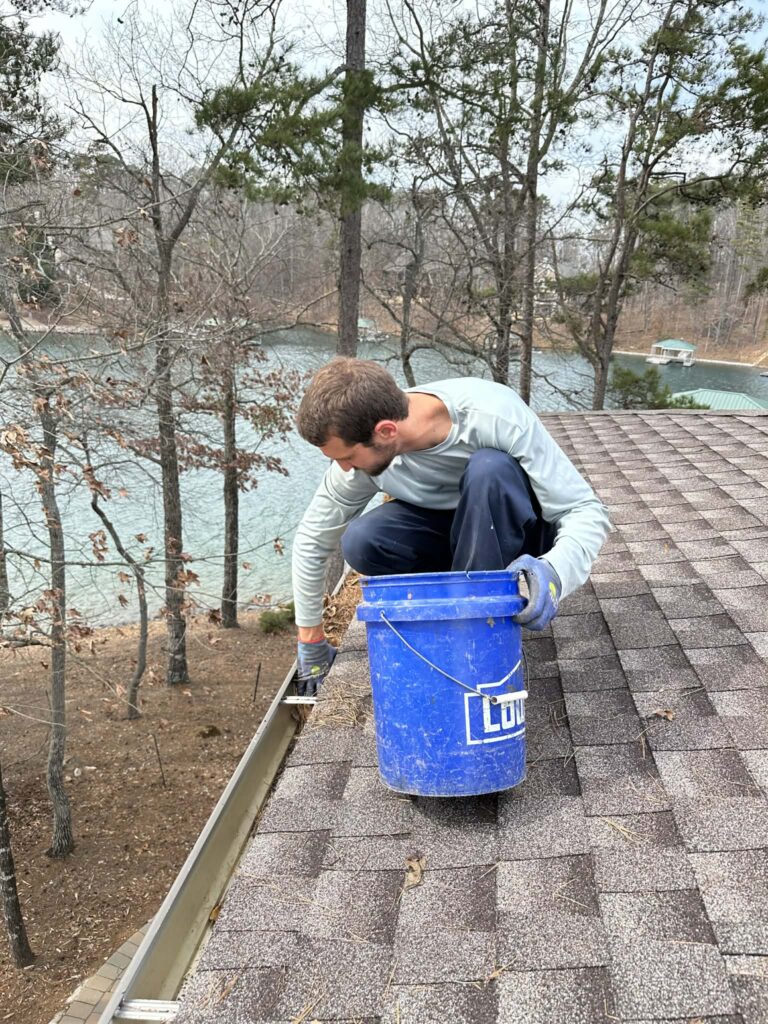
In our experience, many homeowners wait until their gutters begin overflowing before they think about having them cleaned. By that point, leaves, pine needles, seed pods, roof granules, and small twigs may already be packed into the trough or lodged inside a downspout.
When water spills over the gutter, it can run down the fascia, stain the siding, and collect around the foundation. Over time, we see this lead to rotted fascia boards, damp crawl spaces, and other moisture problems that could have been avoided with routine cleaning. Some homeowners’ insurance policies also treat damage from clogged or neglected gutters as a maintenance issue rather than a sudden loss.
For most homes, late spring and late fall are the best times to clean the gutters. Properties with heavier tree cover, however, may also need an extra cleaning after storms or during periods when pine needles and leaves are falling more heavily. However, if you clean gutters too early in the season, they may fill again while the trees are still shedding, and waiting until after several heavy rains can leave the system struggling when it is needed most.
In this guide, we will explain the best times of year to clean your gutters, how often you should actually clean them, and the signs that you should not wait for the next scheduled cleaning.
Best Time to Have Your Gutters Cleaned
The best time to clean your gutters is before they become clogged, rather than waiting until water begins spilling over the edge.
For most homes, the ideal times are late spring, usually from May through early June, and late fall, from late October through November, before the seasonal debris blocks the downspouts, collects standing water, or packs into the trough.
Late Spring
A late-spring cleaning removes leaves, twigs, pollen, seed pods, roof granules, and other debris left behind by winter weather and early spring growth.
Wait until nearby trees have finished dropping most of their blossoms and seeds. If you clean too early, the gutters fill again within a few weeks.
In the Upstate, that means late May in most years, since pine pollen runs heavy through April and the maples and oaks are still dropping seed pods and catkins into early May.
The Greenville area averages just over 50 inches of rain a year, and a good share of it arrives in short, intense summer thunderstorms rather than steady soaking rain. Gutters have to move that volume immediately, or it comes over the front edge.
Late Fall
Late fall is the most important cleaning of the year for many homeowners. Most hardwood trees finish shedding their leaves between late October and November, which makes this the right window to clear the buildup before winter.
In the Upstate, Loblolly and shortleaf pines shed their older needles in fall, not spring, so pine needles land on the roof in the same weeks the hardwood leaves come down.
Pine needles slip through wider gutter screens, mat flat against the bottom of the trough, and hold moisture long after leaves would have dried out. Oaks and hickories add to it by dropping later than most other hardwoods, and some oaks hold dead leaves well into winter and release them a few at a time.
Wait until most of the leaves are down; the cleaning will last longer. Homes surrounded by several mature trees may need an earlier visit if the gutters fill before the season is over.
Clear debris lets rainwater drain freely through the downspouts instead of sitting beneath wet leaves, overflowing onto the fascia, or collecting around the foundation.
Additional Cleanings After Storms
Spring and fall cleanings are enough for many homes, but severe storms and strong winds fill a gutter at any time of year. Branch fragments, leaves, pine needles, and loose roof granules all get washed or blown into the system at once.
Check the gutters after a major storm, especially if you notice water overflowing, a downspout that has stopped draining, or debris collecting along the roofline.
Atlantic hurricane season runs from June through November, and while the Upstate sits well inland, tropical systems still reach us with enough wind to strip debris off the trees in a single afternoon. Homes beneath heavy tree cover may also need an extra cleaning during the summer.
How Often Should You Clean Your Gutters?
Most homes should have their gutters cleaned at least twice a year, once in late spring and again in late fall. That schedule is usually enough to remove seasonal debris before it restricts water flow or reaches the downspouts.
However, the right frequency depends on the surrounding area, the number and type of nearby trees, the roofline, recent weather, and whether the gutters have guards.
Homes With Heavy Tree Cover
Pine needles can fall throughout much of the year, while hardwood leaves, seed pods, blossoms, and small twigs tend to arrive in heavier seasonal waves. In our experience, these homes often need more than the standard spring and fall schedule to keep the downspouts clear.
Homes beneath pine trees, hardwoods, or branches extending over the roof may need gutter cleaning three or four times a year.
Homes With Few Nearby Trees
A home with little tree cover may only need one or two cleanings each year. Even without nearby branches, gutters can still collect roof granules, dirt, insects, windblown debris, and material carried onto the roof during storms.
The gutters should still be checked periodically rather than assuming they are clear based on the lack of leaves.
Homes With Gutter Guards
Gutter guards can reduce debris entering the trough, but they do not eliminate the need for inspection and cleaning.
Leaves and pine needles may collect across the surface, while pollen, roof granules, and smaller particles can pass through and settle underneath. Most guarded systems should still be inspected at least twice a year and cleaned whenever water no longer enters or drains properly.
After Severe Weather
An extra inspection may be needed after strong winds, heavy rain, hail, or a storm that drops branches and leaves onto the roof.
Storm debris can block a gutter or downspout even when the system was cleaned recently. You do not always need to wait for the next seasonal cleaning if you notice water spilling over the edge, a downspout that is no longer draining, or debris collecting along the roofline.
For many homeowners, twice a year is a good starting point. Homes with heavy tree cover or recurring clogs may need a more frequent schedule based on how quickly debris returns.
Signs Your Gutters Need Cleaning
Gutters usually show signs of trouble before they become completely blocked. Some are easy to spot from the ground, while others appear as moisture damage around the roofline, siding, or foundation. Here are some of the most common signs we see:
Water Is Overflowing or Draining Slowly
Water spilling over the front of the gutter during rain is one of the clearest signs that debris is restricting the flow. You may also notice that one downspout releases much less water than the others or does not drain at all.
Water can also spill behind the gutter when the trough is clogged, improperly sloped, or beginning to pull away from the fascia. Instead of being directed toward the downspout, it runs against the roof edge and exterior walls.
Leaves, Plants, or Pests Are Visible
Leaves, pine needles, and twigs sticking out of the gutter usually mean there is much more debris packed inside. If weeds or small plants have started growing, the material has likely been sitting long enough to break down into damp organic matter.
Birds, insects, and other pests may also begin nesting in clogged gutters. Standing water can attract mosquitoes, while packed leaves create sheltered spaces for wasps, birds, and rodents.
The Gutters Are Sagging or Pulling Away
Wet debris can become surprisingly heavy. As it builds up, the added weight may cause the gutter to sag, loosen its hangers, or pull away from the fascia board.
A sagging gutter will no longer drain at the correct slope. Water then settles in the low sections, adding even more weight and increasing the chance of leaks or complete separation.
Water Damage Is Appearing Around the Home
Stains on the siding, peeling paint, mold near the roofline, and rotting fascia boards can all indicate that water is repeatedly escaping from the gutter system.
You may also notice puddles around the foundation, erosion in landscaped areas, damp spots in the crawl space, or basement moisture after heavy rain. These problems can have several causes, but clogged or overflowing gutters should be checked during the inspection.
In colder weather, ice forming along the gutter edge may also indicate trapped water that cannot drain properly.
Benefits of Cleaning Your Gutters Regularly
Regular gutter cleaning helps rainwater move from the roof, through the downspouts, and safely away from the home. When that path remains open, several parts of the property are less likely to experience avoidable water damage.
It Protects the Roofline and Fascia
Clogged gutters allow water to remain against the roof edge or spill behind the trough. Over time, that moisture can contribute to damaged roof decking, peeling paint, and rotted fascia boards.
Removing the debris also reduces the weight placed on the gutter hangers and helps prevent sections from sagging or pulling away.
It Directs Water Away From the Foundation
A working gutter system carries roof runoff toward the downspouts and away from the foundation. When gutters overflow, that water falls directly beside the home instead.
Repeated saturation can erode the surrounding soil, damage landscaping, and contribute to moisture in basements and crawl spaces.
It Helps Prevent Downspout Clogs
Leaves and twigs that remain in the gutter are eventually carried toward the downspout. Once they become lodged inside an elbow or underground drainage line, they can be much harder to remove.
Routine cleaning removes debris before it can travel deeper into the system and cause a complete blockage.
It Reduces Standing Water and Pest Activity
Packed leaves hold moisture long after the rain stops. That standing water and damp organic material can attract mosquitoes, insects, birds, and other pests.
Keeping the trough clear removes many of the sheltered areas they use for nesting and allows the gutter to dry more quickly.
It Can Extend the Life of the Gutter System
Gutters last longer when they are not carrying the weight of wet debris or holding water against joints, seams, and fasteners. Regular cleaning also gives the contractor an opportunity to identify loose hangers, leaking corners, corrosion, and drainage problems before they require larger repairs.
How to Keep Gutters From Clogging So Quickly
No gutter system stays clean forever, but a few steps can slow the buildup and reduce the risk of an unexpected blockage.
- Follow a regular maintenance schedule: Spring and fall cleaning is enough for many homes, while properties with heavy tree cover may need additional visits.
- Trim branches near the roof: Cutting back overhanging limbs reduces the number of leaves, pine needles, seeds, and twigs that fall directly onto the shingles.
- Consider gutter guards: A properly selected system can keep larger debris out and extend the interval between cleanings. Guards still need periodic inspection and surface cleaning.
- Check the system after major storms: Strong winds may quickly fill a recently cleaned gutter with leaves and branch fragments.
- Flush the downspouts: Running water through them can reveal slow drainage and clear smaller obstructions before they become complete blockages.
- Keep larger debris off the roof: Material left on the shingles will eventually wash into the gutter. Roof cleaning should be left to a professional when the surface is steep, high, or difficult to access.
Keep Your Gutters Clear Before the Next Heavy Rain
Gutter cleaning is easiest to manage when it is scheduled before the system becomes completely blocked. For most homes, a late-spring and late-fall cleaning is a good starting point, while properties with heavy tree cover may need additional attention throughout the year.
Waiting until water is already overflowing can leave the fascia, siding, foundation, and crawl space exposed to moisture that could have been prevented. Regular cleaning also gives you a chance to catch loose gutters, leaking joints, damaged hangers, and clogged downspouts before they turn into larger repairs.
If your gutters are full, draining slowly, or have not been cleaned recently, Sure Flow Gutters can remove the built-up debris, clear the downspouts, and inspect the system for signs of damage or poor drainage.
Contact Sure Flow Gutters or call (864) 539-6903 to schedule professional gutter cleaning and help keep water moving safely away from your home.