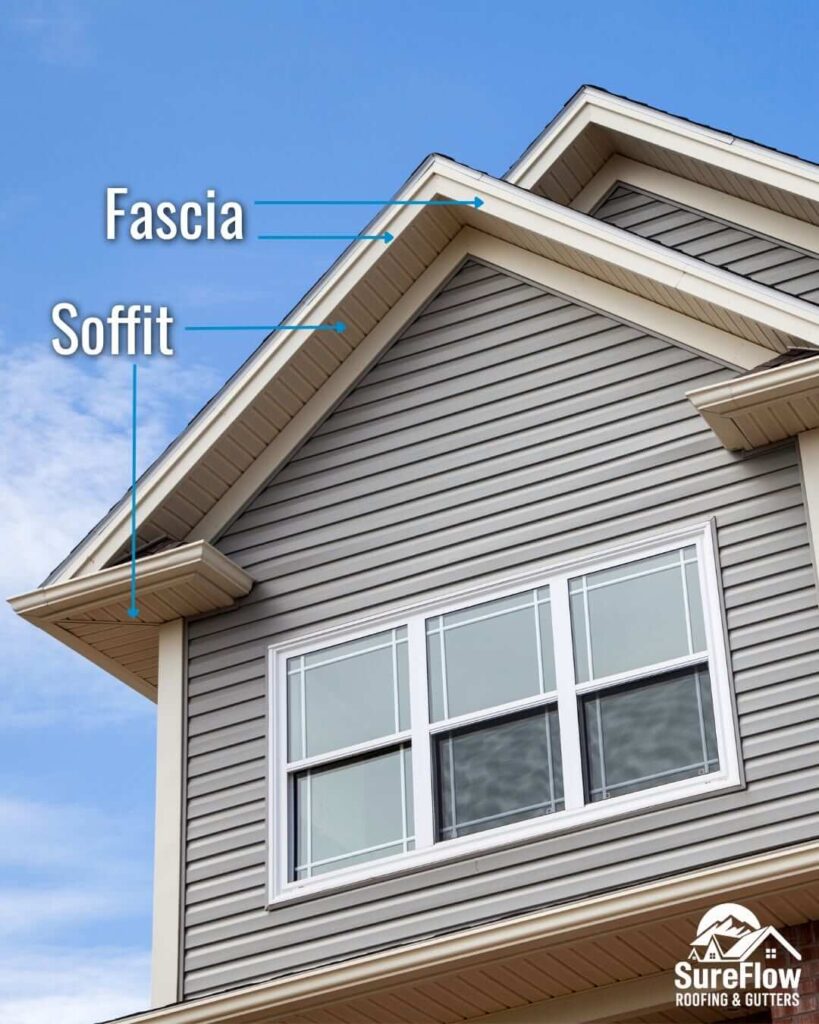
If you notice water leaking between the roof fascia and gutter, it usually means rainwater is getting behind the gutter instead of flowing into it.
We often see a missing or poorly installed drip edge or gutter apron as one of the main causes, but we also see loose or misaligned gutters, clogs, poor gutter pitch, and roof-edge issues that cause water to run behind the gutter.
Repeated water exposure can stain or rot the fascia and eventually weaken the gutter attachment, so you should address the problem before the damage gets worse, especially if the leak happens every time it rains or the fascia already shows signs of peeling paint, softness, or rot.
In this article, we’ll cover common reasons water leaks between the fascia and gutter, how to identify the cause, and the right way to fix each one.
Common Causes of Water Leaking Between the Fascia and Gutter
Several problems can allow rainwater to get behind a gutter.
The location and timing of the leak can often point to the cause, but it’s also likely that multiple issues may be present at the same time.
1. Missing or Improperly Installed Drip Edge or Gutter Apron
The drip edge or gutter apron at the roof edge helps direct rainwater away from the fascia and into the gutter. If this flashing is missing, damaged, too short, or positioned incorrectly, water can follow the roof edge and run behind the gutter instead.
We often check the roof-edge flashing first when water consistently runs down the fascia even though the gutter itself is clear.
You may also notice water stains on the fascia, peeling paint, or deterioration along the top of the fascia board.
When we fix this issue, we create a continuous path that directs water from the roof edge into the gutter. That may require correcting the existing drip edge, installing the appropriate gutter apron or flashing, or addressing how the flashing and gutter meet.
Caulk alone usually won’t correct this type of problem. Sealant can help at certain joints and connections, but filling the gap between the fascia and gutter does not fix flashing that allows water to travel behind the gutter.
If the repair requires lifting or removing shingles or roof-edge components, have a professional inspect the roof-to-gutter connection before making changes.
2. The Gutter Has Pulled Away From the Fascia
A gutter should remain securely attached to the fascia. Loose hangers, failing fasteners, excess weight from debris or water, and fascia deterioration can allow the gutter to pull away and create a visible gap.
Once that gap develops, roof runoff may get behind the gutter instead of entering it. The problem can worsen over time because repeated moisture exposure can soften or rot the fascia, giving the gutter fasteners even less solid material to hold onto.
If the fascia is still in good condition, the repair usually involves replacing or tightening the appropriate hangers or fasteners and realigning the gutter.
If the fascia is rotten or damaged, we address the source of the moisture before securely reattaching the gutter.
3. The Gutter Is Positioned Incorrectly
We often see gutters that are securely attached but sit too low, too far away from the roof edge, or in the wrong position relative to the drip edge or gutter apron.
This problem can happen with older gutter systems, but it can also show up after a new installation. The gutter may look fine from the ground, but rainwater can slip between the roof edge and the back of the gutter during a storm.
The repair usually involves correcting the gutter position or the roof-edge flashing so runoff has a clear path into the gutter.
Don’t use sealant as a substitute for correcting a gutter installed in the wrong position.
4. Clogged Gutters or Downspouts
A clogged gutter or downspout can cause water to back up until it spills over the rear edge of the gutter and runs down the fascia.
If leaves, pine needles, shingle grit, and other debris collect in the gutter itself or form a blockage around the downspout opening, the gutters might overflow.
We often see this buildup on homes throughout Seneca and Upstate South Carolina, especially where trees are close to the roof.
Check whether the gutter holds water or overflows during rain.
Clear the gutter and downspouts so water can move freely through the system. If debris buildup is a recurring problem, routine gutter cleaning or an appropriate gutter protection system can help reduce future blockages.
5. Poor Gutter Pitch or Sagging Sections
Gutters need the proper slope toward their downspouts so rainwater can drain instead of collecting in the trough. A gutter with poor pitch, a sagging section, or a low spot can hold water and eventually overflow against the fascia.
You may notice water sitting in the gutter after the rain has stopped or one section overflowing while the rest of the system appears to work normally. The extra weight of retained water and debris can also place more stress on the hangers and fascia over time.
The fix may require adjusting the hangers, correcting a sagging section, or resetting the gutter so water drains toward the downspout.
6. The Gutter System Cannot Handle the Roof Runoff
Some leaks only appear during heavy rain. In those cases, the problem may be the amount of water reaching one section of the gutter, not a simple gap behind it.
Large roof sections, roof valleys, long gutter runs, too few downspouts, or poorly placed downspouts can concentrate more runoff in one area than the system can drain quickly. Water can then spill over the front or back of the gutter, with rear overflow appearing as a leak between the gutter and fascia.
Consider this when the problem happens during heavy Upstate South Carolina downpours but not during lighter rain.
The solution depends on the roof and gutter layout and may involve improving downspout placement, adding drainage capacity, or changing the gutter configuration where runoff is concentrated.
7. The Water Is Coming From a Roof-Edge Problem
Sometimes the gutter is not the source of the leak at all. A problem with the shingles, roof-edge flashing, or another component near the eave can allow water underneath the roofing system.
That water may travel before it becomes visible along the fascia or behind the gutter.
If the gutters are clean, properly positioned, and draining correctly but the fascia still gets wet, we also recommend inspecting the roof edge.
If the flashing is damaged, it may need to be replaced, while problems involving shingles or other roofing components may require a roof repair rather than a gutter repair.
Get Help With Water Leaking Behind Your Gutters
If you notice water leaking between the fascia and gutter, it can come from the gutter system, the roof edge, or both.
If the water source isn’t obvious or the problem keeps coming back after cleaning the gutters, have a professional inspect the roof-to-gutter connection before more damage develops.
At Sureflow Gutters, we can inspect the gutters, fascia, drip edge, and surrounding roof area to find where the water is getting through and recommend the appropriate repair.
If you’re dealing with water leaking behind your gutters in Seneca or the surrounding Upstate South Carolina area, contact us to schedule an inspection. You can also call us at (864) 539-6903.